

In an increasingly volatile global economy, the resilience of supply chains has become a strategic priority for business leaders. Traditional efficiency only models are giving way to approaches that balance liquidity, risk, and long term stability. Early payment programs, where buyers offer suppliers faster access to cash in exchange for incentives, have emerged as a key element of this transformation. These programs not only improve working capital flows but also strengthen supplier relationships and enhance overall supply chain resilience.
As we look ahead to 2026, businesses are rethinking how early payment fits into broader financial and operational strategies, using it to support both buyers and suppliers amid ongoing uncertainty.
Why Early Payment Matters for Supply Chain Resilience
A shift toward resilience in supply chain strategy has been a priority for corporates operating amid geopolitical shifts and ongoing disruptions. According to industry coverage, companies are increasingly focused on securing diversified funding structures and enhancing working capital as essential components of resilient supply chains, not just pursuing cost efficiency alone.
Early payment programs play directly into this need by giving suppliers predictable access to liquidity, helping them manage cash flow without expensive external financing, maintain production continuity, and invest in growth or innovation.
Working Capital: From Tactical to Strategic
McKinsey’s work on cash flow and working capital highlights a broader trend: optimization of working capital is no longer a back office exercise but a strategic lever that can influence organizational transformation momentum. When firms focus on cash conversion cycles and adopt modern technologies, they can dramatically improve liquidity positions without heavily relying on external debt.
In this context, early payment programs help unlock trapped cash in days sales outstanding (DSO) and accounts payable, giving suppliers the flexibility they need while improving overall ecosystem cash flows. This approach supports a shift from reactive liquidity management to proactive resilience planning.
The Supplier Perspective: Liquidity and Stability
Industry analysis consistently emphasizes that suppliers, especially small and medium enterprises, face growing pressure from payment delays and unpredictable cash flows. Access to early payment through structured programs or supply chain finance can serve as a financial buffer for these firms, reducing reliance on high cost credit and smoothing working capital cycles.
For buyers, enabling earlier payments is also a relationship building strategy. It signals support for supplier health and operational continuity, reducing the risk of disruptions that can cascade through the value chain.
Program Design: Flexibility and Integration
Successful early payment programs increasingly integrate with broader financial solutions like dynamic discounting and supply chain finance, creating a flexible suite of working capital tools. Rather than operating in isolation, these programs can be designed to:
- Offer tiered early payment options linked to cash availability and supplier preference
- Use technology to automate approvals and payments for greater efficiency
- Blend internal cash with external funding to optimize cost and participation
This layered approach aligns with evolving working capital frameworks where finance teams balance internal liquidity, third party financing, and supplier empowerment to maximize impact.
Measuring Impact Beyond Cash Flow
The value of early payment programs extends beyond immediate liquidity improvements:
- Stronger supplier relationships through predictable payment terms
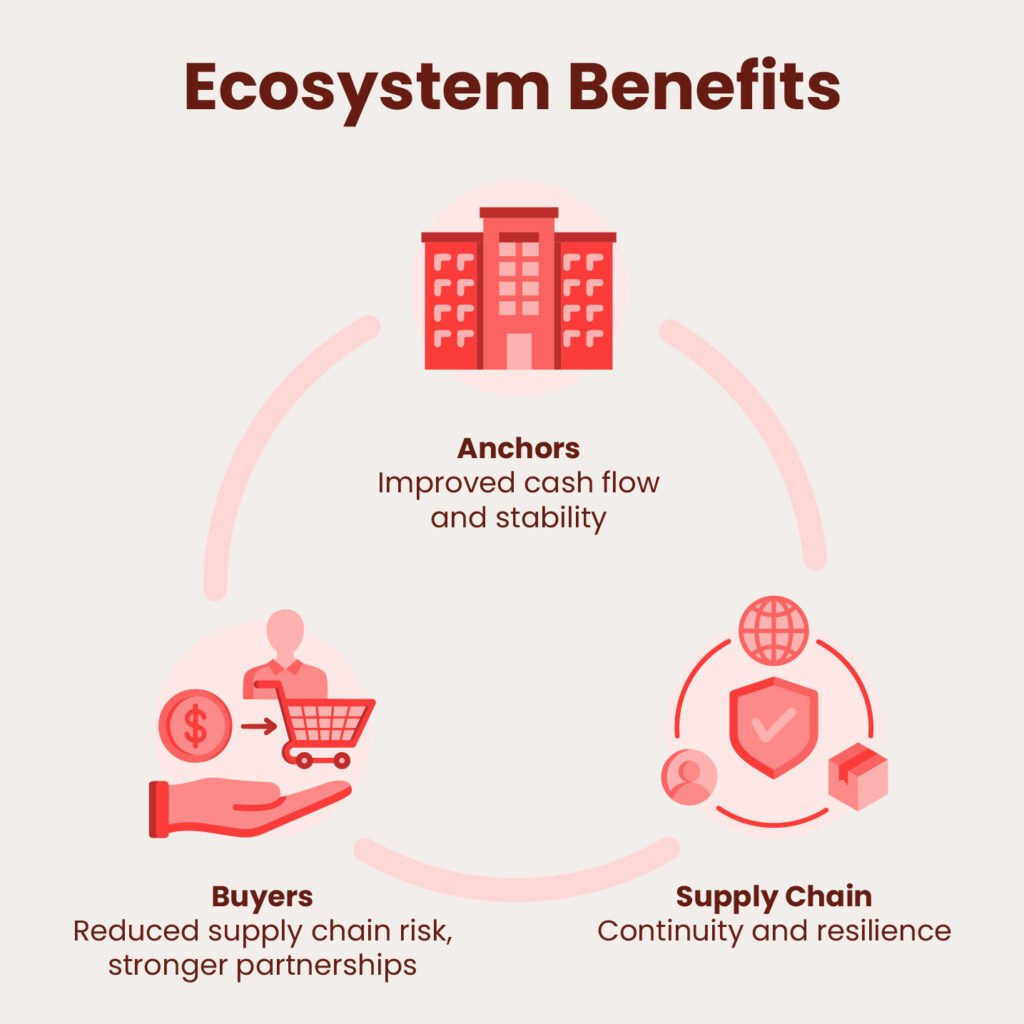
- Reduced supply chain risk as smaller suppliers that supply critical components are more financially stable
- Operational continuity, even amid market disruptions with ready access to operating cash
- Enhanced working capital metrics, improving cash conversion cycles and financial flexibility
These benefits support an organization’s overall strategic agility, reinforcing early payment programs as an essential tool in risk aware finance and procurement planning.
Conclusion
As businesses brace for ongoing economic uncertainty in 2026, early payment programs will play a crucial role in fostering Anchor led resilience and strategic working capital management. By enabling faster access to cash, integrating with comprehensive supply chain finance solutions, and reinforcing strong buyer–supplier relationships, companies can build more robust ecosystems capable of weathering disruption while optimizing gain during favorable interest rate conditions.
In an era where liquidity equals flexibility, early payment programs are not just tactical tools, they are enablers of sustainable, resilient supply chains.