

In today’s fast-paced business environment, cash flow and liquidity management are more critical than ever. Companies are under constant pressure to optimize working capital, reduce operational costs, and improve supplier and customer relationships. Traditional manual processes for payables and receivables are no longer sufficient.
Automated payables and receivables financing is transforming the way businesses manage cash flow. By combining digital platforms, real-time visibility, and intelligent workflows, companies can unlock liquidity faster, reduce errors, and gain actionable insights across the financial supply chain.
Why Automation Matters
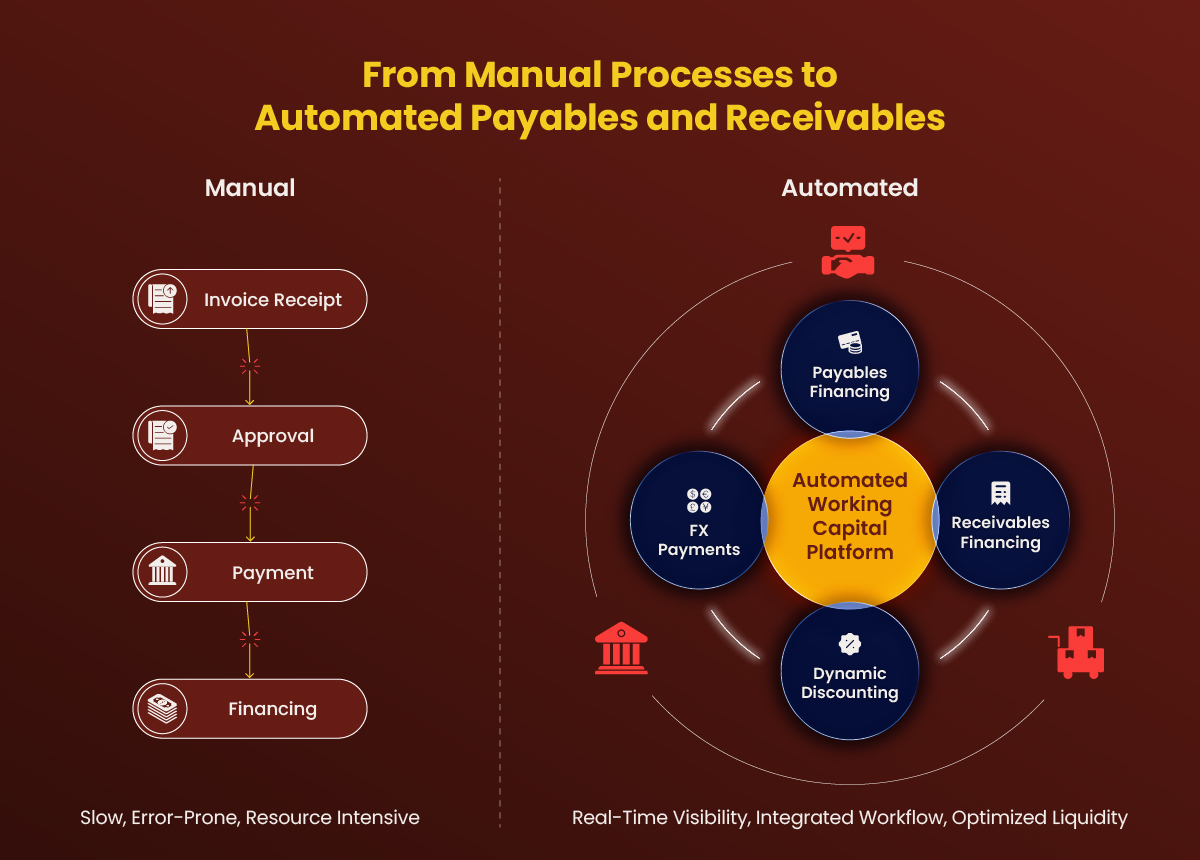
Manual processing of invoices and payments is slow, prone to errors, and resource intensive. Some common challenges businesses face include:
- Delays in invoice approval and payment
- Limited visibility into outstanding payables and receivables
- Increased operational costs due to manual intervention
- Difficulty optimizing working capital and supplier relationships
Automation addresses these challenges by digitizing and streamlining the entire process, from invoice receipt to payment execution and financing decisions.
The Benefits of Automated Payables and Receivables Financing
- Improved Cash Flow and Working Capital
Automation allows companies to accelerate receivables and strategically manage payables. Early payment programs and dynamic discounting options ensure liquidity is optimized without compromising relationships with suppliers. - Faster, More Accurate Processing
Digital platforms reduce manual entry and errors, ensuring invoices are approved, matched, and financed efficiently. This saves time and reduces operational risks. - Greater Transparency and Control
Finance teams gain real-time visibility into payables, receivables, and financing options. This transparency helps CFOs make informed decisions and maintain control over cash positions. - Stronger Supplier and Customer Relationships
Timely payments and flexible financing options build trust and collaboration across the supply chain. Suppliers gain predictable cash flow while buyers can extend terms or optimize capital. - Scalability and Integration
Automated platforms integrate seamlessly with ERP, procurement, and treasury systems, supporting both SMEs and multinational corporations as they grow.
How Digital Platforms Drive the Transformation
Modern working capital platforms offer integrated solutions for payables financing, receivables financing, dynamic discounting, and even FX payments. By centralizing these functions, finance teams can:
- Manage cash flow and liquidity across multiple entities and currencies
- Execute financing decisions instantly based on real-time data
- Reduce reliance on spreadsheets, emails, and manual approvals
- Access insights and analytics to optimize financing strategies
Automation is no longer optional. Companies that adopt automated payables and receivables financing gain a competitive edge by freeing up cash, reducing risk, and improving operational efficiency.
Conclusion
The rise of automated payables and receivables financing marks a shift in how businesses manage working capital. Digital platforms are replacing siloed, manual processes with integrated, transparent, and scalable solutions. CFOs, treasury teams, and procurement leaders who embrace automation can unlock liquidity, strengthen relationships, and drive sustainable growth.
The future of working capital is connected, efficient, and intelligent. Automation is the key to unlocking it.